686 stories
·
2 followers

An ESP32 based plane radar for my desk

1 Comment

This project made for a perfect lazy Saturday unwind, after a busy week giving a talk at Devrelcon in NYC. Makerworld had this thing as one of their featured models about a week or two ago, and the parts came in while I was away.

GitHub preview for ironicbadger/ESP32-Plane-Radar GitHub repository ESP32-Plane-Radar Open-source ESP32 firmware for a 1.28″ round display that shows live ADS-B aircraft around your location as a sonar-style plane radar. by ironicbadger · C++ · MIT

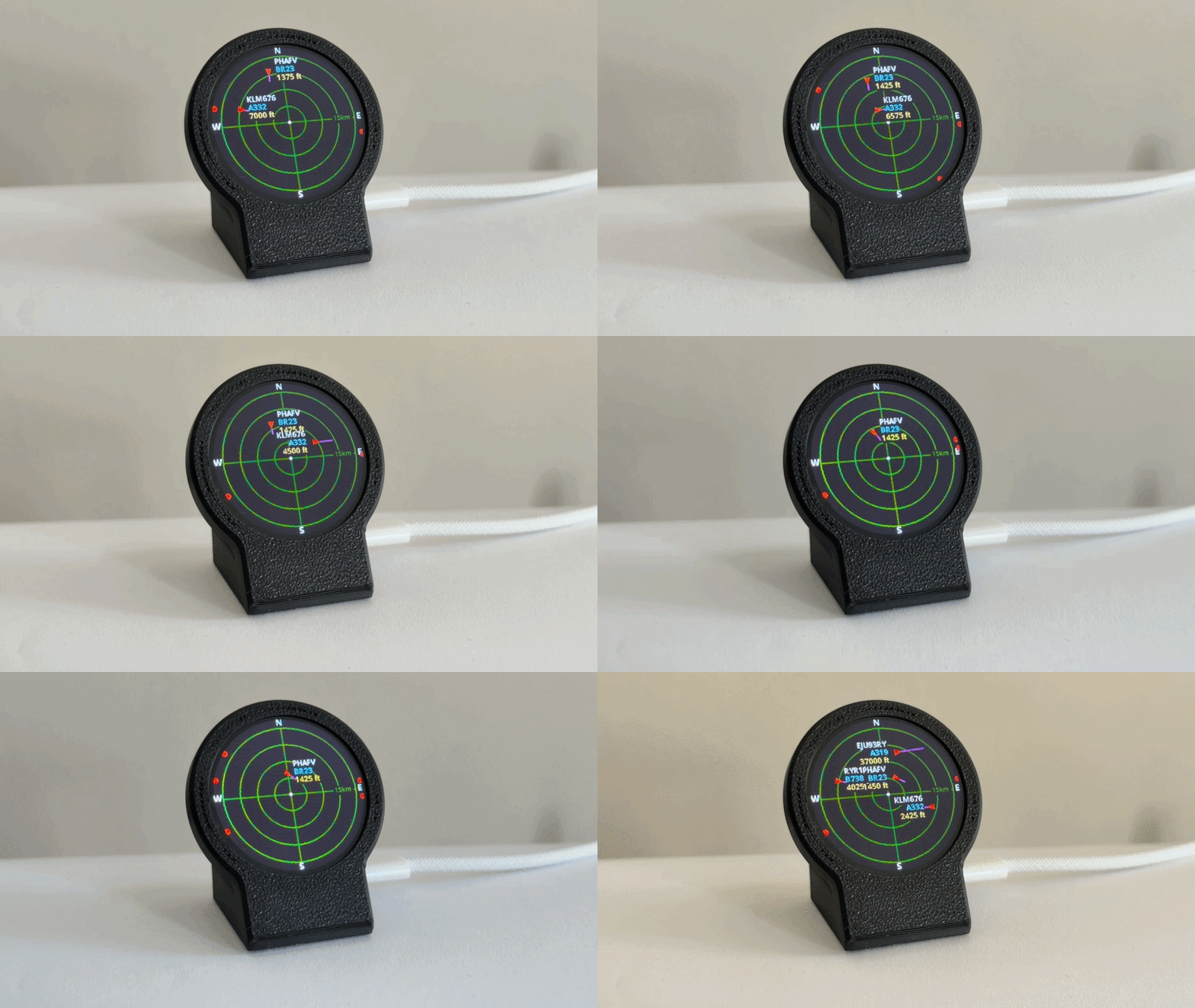
Plane radar is a neat little project that turns an ESP32-C3 and a 1.28-inch round display into a live aircraft radar. It pulls nearby ADS-B traffic, plots each aircraft by distance and bearing, and shows the details directly on the screen.

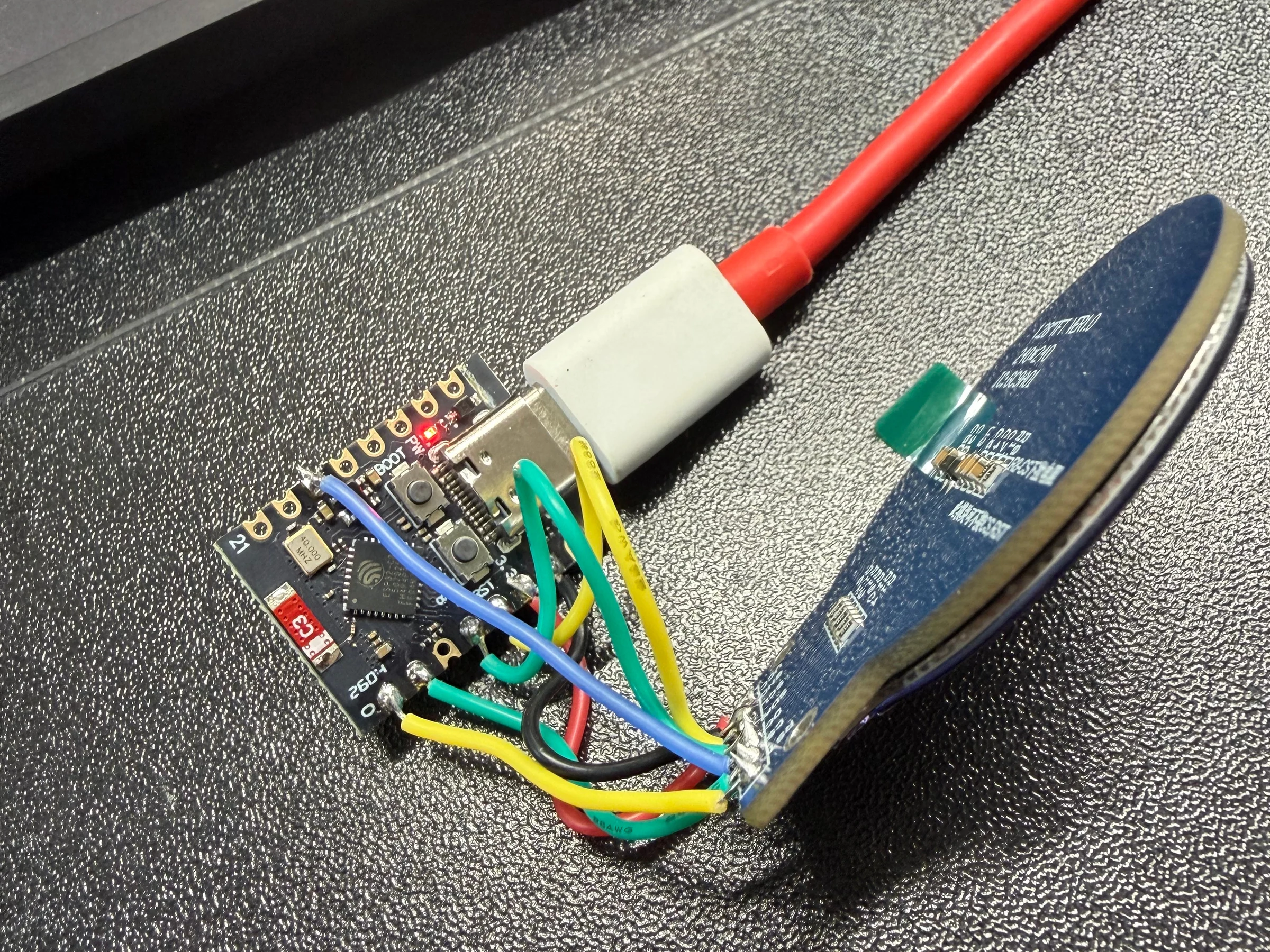
It was an easy build, although it did require a little soldering. I always enjoy doing that as it reminds me of my days building racing drones. Thin, silicone based wires made quick work of the cabling. And after about 15 minutes, we were ready to go.

An ESP32-C3 wired to a round display during assembly

It is insanely easy to flash firmwares to a fresh esp32 these days using the browser-based ESPHome web flashing tool. Under 30s and you’re done.

A quick note about the 3d model

The original model was featured on Makerworld, because it looks great. Reality though was, in practice, it’s not actually that great.

ESP32 Plane Radar — Live ADS-B on a Round Display by matixovi on MakerWorld MakerWorld 5.4Klikes 3.3Kdownloads 15.1Ksaves 2.4Kmakes Original 3D model ESP32 Plane Radar Live ADS-B on a Round Display by matixovi · Published May 31, 2026

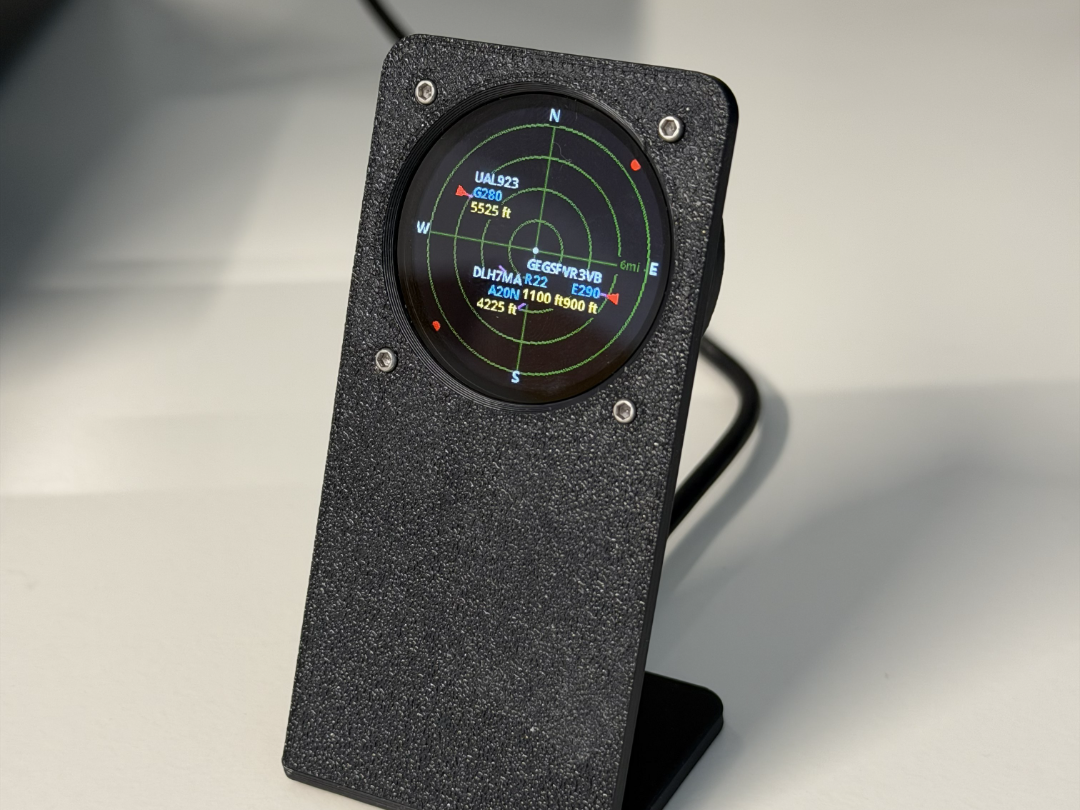
Unfortunately the tolerances are just too tight to be usable with the batch of boards I got. So I’m likely going to model my own replacement at some point, but for now I ended up printing this model instead.

ESP32-S3 1.28" Waveshare Plane Radar by ThePrintableWatch on MakerWorld MakerWorld 154likes 194downloads 470saves 102makes Original 3D model ESP32-S3 1.28" Waveshare Plane Radar by ThePrintableWatch · Published Jun 10, 2026

Customising the firmware

I’ve spent today improving my fork of ESP32 Plane Radar project, with the help of pure vibes.

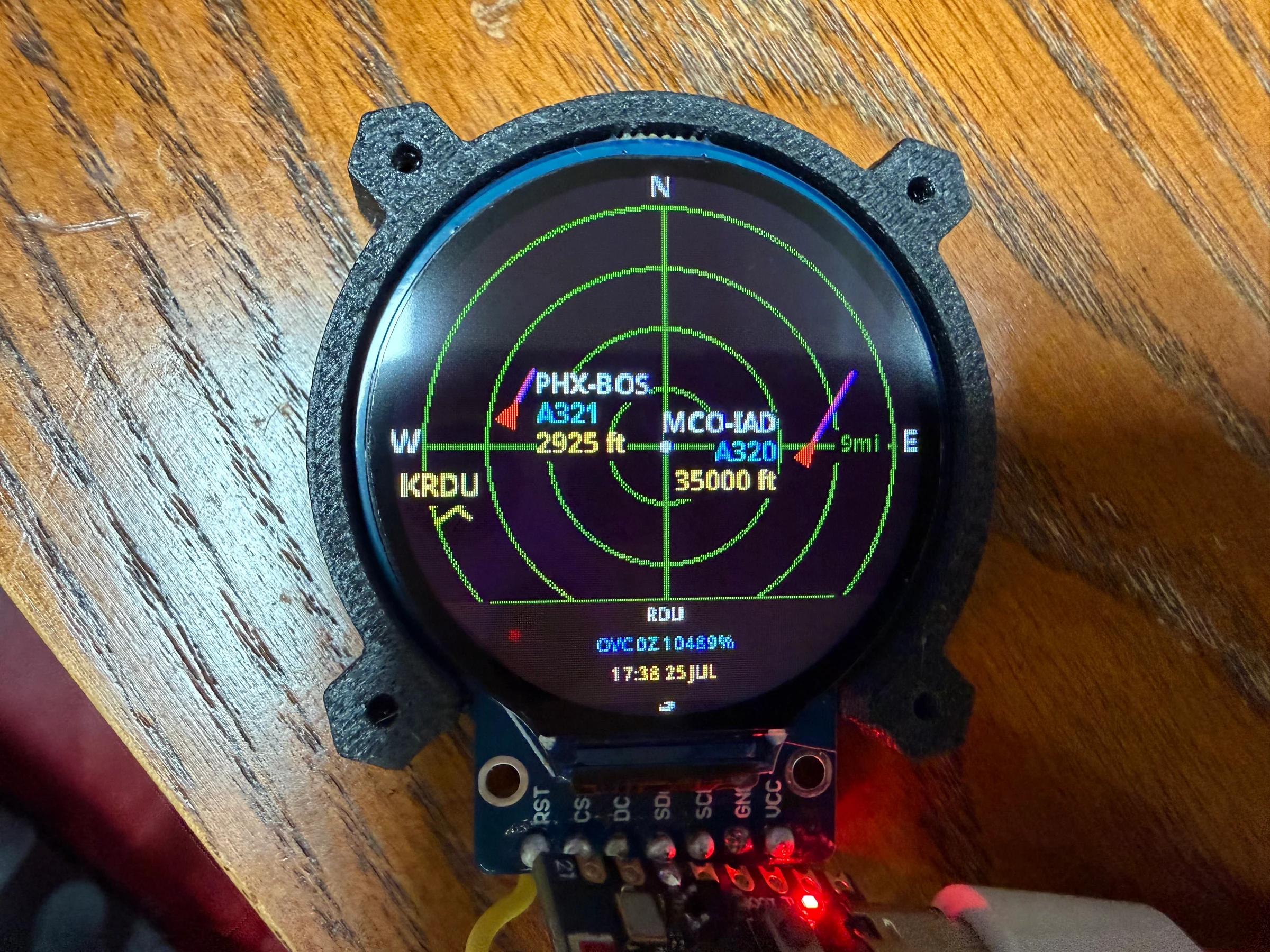
The biggest improvement is proper flight context. Where the data is available, aircraft now show their origin and destination instead of just their tail number, with the callsign used as a fallback. Aircraft types are also more descriptive, something like B737-800 rather than simply B737. I added local weather, temperature, humidity, time and date as well.

The web interface can now modify coordinates after initial setup. Display options can now be changed without resetting the Wi-Fi configuration, and there are controls for units, runways, weather, temperature format and 12/24-hour time. Text is 10% larger by default, with a persistent 80–130% slider for adjusting it.

ESP32 plane radar showing live aircraft, weather and flight context

Finally, the firmware now supports authenticated OTA updates, so future builds can be installed through the browser instead of connecting the board over USB.

I’ve compiled, flashed and tested everything on the actual device, and the latest work is committed to the main branch. Next up will probably be porting it to a larger display and designing a tidy 3D-printed enclosure for it.

Adblock test (Why?)

Read the whole story
GaryBIshop
9 hours ago
reply
This would look cool at your house!
Share this story
Delete

Who's afraid of Chinese models?

1 Comment

[unable to retrieve full-text content]

Comments
Read the whole story
GaryBIshop
5 days ago
reply
Really interesting read.
Share this story
Delete

Humanoid Companion Robots are Launching This September

1 Comment

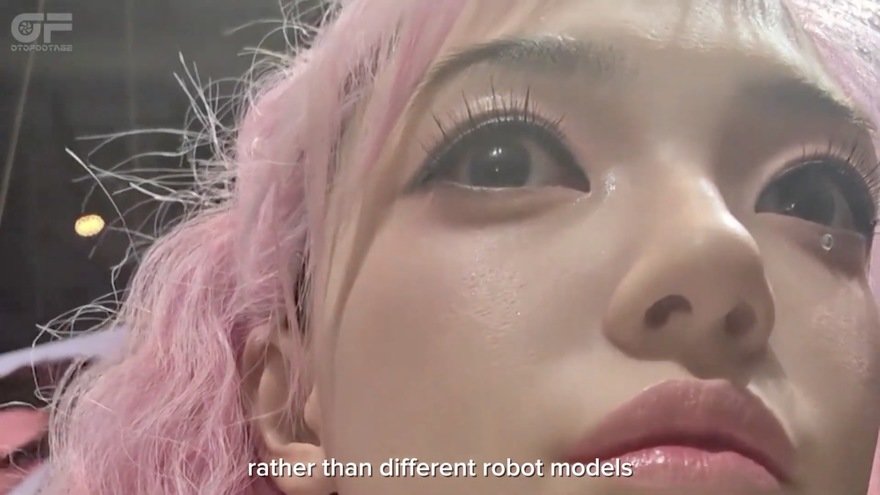
It's hard to believe anyone thinks this is a good idea. Chinese robotics firm UBTECH has unveiled their UWORLD U1 brand of humanoid companion robots, which look like K-Pop idols or anime characters.

These robots are designed to offer "daily companionship, emotional support, lifestyle enhancement, and social assistance, as well as reception and hospitality services, elder care, psychological support, tourism and exhibitions, research and education, and premium domestic service applications." They're part of the company's "Human-Robot Companionship Initiative," and are presented as a social good:

China has more than 90 million adults living alone and 118 million empty-nest seniors, with an estimated 10% to 20% of individuals living alone meeting the clinical criteria for mental health disorders. In response, UWORLD announced plans to donate customized humanoid robots each year to support vulnerable groups, including children growing up apart from one or both parents, older adults living alone, and families facing difficult circumstances, with the goal of providing long-term emotional companionship and psychological support.
In 2026, UWORLD plans to donate 100 customized U1 Series humanoid robots. These units will incorporate 3D facial reconstruction and voiceprint-based identity replication technologies to recreate designated individuals, while integrating emotion-driven interaction models and dedicated long-term memory systems. Combined with multimodal situational awareness, the robots are designed to provide structured psychological support services.

The 100 donated units dwarf the commercial numbers; following the announcement, the company has racked up some 13,000 pre-orders.

Three trim levels, for lack of a better term, are on offer. The U1 Lite is a torso with no arms but gigantic breasts, apparently meant for reception roles:

The U1 Pro has a full body and can stand (but apparently not walk):

And the U1 Ultra can walk, and perform complicated physical tasks like waltzing. (In the image below, the male is human, the female is the 'bot.)

What's disturbing is that thanks to 3D scanning and voice cloning, the robots can be customized to the point of mimicking actual people. The company is selling this as a plus.

Here's what these things look and sound like in action:

The U1 Lite runs around $16,500; the U1 Pro, $23,500; and the Ultra, $137,000. They'll roll out in September.


Read the whole story
GaryBIshop
6 days ago
reply
Uncanny
Share this story
Delete

The AI Layoff Story Was Always a Sales Pitch

1 Comment and 2 Shares

Last year, the most powerful people in technology told you, in plain language, that AI was coming for your job. Whole categories of work, gone. This year, quietly, those same companies started hiring again.

Amazon cut about 16,000 people, leaned hard into the story that AI was making it lean and efficient, and then turned around and opened 11,000 new roles for juniors and interns. The executive running its cloud business explained why he wanted all that young, green talent in the building: they come in with an energy and an excitement, a new view on things.

So which is it? Was this the robot apocalypse we were all promised, or was that always a story somebody was selling you? Both of those cannot be true at once.

I want to be useful to one person in particular here. If you run a business, or you’re about to, the whiplash is not just gossip about billionaires. The swing from everyone-is-getting-replaced to wait-we’re-hiring-again is about to cost you real money if you believe either version. I’ve spent 30 years building things, and I use these AI tools every single day. What actually happened is more interesting than either headline.

This is Part 1 of a three-part look at the AI jobs story: what’s happening, whether it was ever real, and what you should actually do about it.

The failures are real

Start with the failures, because they earned the mockery. Klarna, the buy-now-pay-later company, proudly handed something like 700 customer-service jobs to an AI chatbot. Efficiency, they said. Then satisfaction fell off a cliff, the answers came back wrong or cold, and Klarna quietly started hiring humans back into a blended model, where a real person is reachable again when the bot gets stuck.

Duolingo announced to the world that it was now “AI first” and would lean less on human contractors. The internet did not take that well. A few weeks later the public tone had shifted to, more or less, wait, please come back. IBM, Tesla’s robot-heavy factories, the fast-food drive-throughs that put bacon on a stranger’s ice cream. The same arc, over and over.

And once you’ve seen it enough times, you notice every one of these failures has the same shape. The AI walks in and genuinely does a big chunk of the job. Call it 60%: the repeatable, predictable part. Then it hits the other 40% and faceplants. Because that 40% was never the typing. It was judgment. Knowing this customer is furious and needs a manager. Knowing this invoice looks wrong even though the math adds up.

But was it ever really AI?

This is where the tidy story, the one where AI simply failed and everyone learned a lesson, starts to fall apart. There’s a bigger question underneath, and it’s uncomfortable: was it ever really about AI at all?

Rewind to 2020 and 2021. Money was nearly free, all of us were locked inside buying everything through a screen, and the tech giants hired like the party would never end. They massively over-hired. Then the world reopened, interest rates climbed, and all those extra salaries suddenly looked expensive. The layoffs that followed were, in large part, the hangover from that binge. They were coming with or without a chatbot.

So picture a CEO with two ways to explain the same 10,000 job cuts. Version one: we hired badly, we got over our skis, and now we’re cleaning up our own mess. Version two: we are riding an AI wave so powerful that we simply don’t need as many people anymore. The first tanks your stock. The second pumps it. Guess which label they reached for. Meanwhile the actual unemployment rate barely moved, from about 3.9% to 4.3%.

Watch what these companies do, not what they say. The same Amazon that framed its cuts around AI efficiency was, in that same stretch, bringing in thousands of engineers on work visas and hiring 11,000 juniors. If the machines were really doing the work, you would not need to import thousands of engineers and grow your entry-level ranks at the same time. The full forensic case for all of that is its own piece, and it’s the next one. For today, sit with this: AI was often the most flattering explanation available for a decision the company had already made.

The pivot: the same people walk it back

Then came the part that made me sit up. The very same people who spent last year warning that AI was about to flatten the workforce have, over the last few months, quietly changed their tune. Almost in unison. And the timing tells you everything.

Sam Altman, who runs OpenAI, spent a year warning that whole job categories would vanish. Recently he said he was “delighted to be wrong.” Dario Amodei, who runs Anthropic, had said as much as half of all entry-level white-collar jobs could disappear, with unemployment as high as 20%. He’s been softening that into a sunnier story about AI making everyone more productive. Elon Musk went from AI will hit jobs like lightning to, barely paraphrasing, work will soon be optional, like growing your own vegetables for fun.

So why the sudden group hug? Follow the money. Last year, doom was the product. If your AI is so powerful it could end civilization, it’s certainly powerful enough to justify a subscription and a valuation with a lot of zeros. Fear sold the software and floated the private money. But now these same companies are lining up to go public. Anthropic just filed the confidential paperwork for a stock offering.

And selling stock to the public changes the math. As one PR strategist put it, you can’t go to the public market selling societal collapse. Nobody lines up to buy shares in the apocalypse. So the story had to flip. Doom raised the private money. Optimism sells the public offering. The narrative didn’t change because the facts changed. It changed because what these people needed to sell you changed.

P.T. Barnum with a server farm

Here’s a simple test I now run on every one of these announcements, and I’d hand it to you to keep. Ask one question: who benefits if I believe this? If the answer is the company making the claim, slow down. If the answer is a company with a stock offering six months away, slow all the way down. That one question would have saved a lot of people a lot of grief, in both directions, this whole cycle.

None of this is new. We’ve just never seen it run at this scale. This is P.T. Barnum with a server farm. The same showmanship that packed circus tents a hundred years ago, the grand claim you can’t check until it’s too late to matter, now wrapped around a genuinely useful technology and pointed first at your fears and then, when convenient, at your hopes. The tool is real. The show around it is a performance.

Tasks, not jobs

Strip the show away, and the truth is boring and useful. AI is genuinely good at tasks. It is not replacing jobs. Those are completely different things. A job is a bundle of tasks, plus judgment, plus context, plus relationships. AI can take a real bite out of the tasks. It falls apart on the rest. That’s the 60/40 split, and it’s the whole lesson, hiding under a year of noise.

The leftover 40%, the judgment and the context, is almost always the exact thing you were paying that person for. It’s the veteran who knows which client disputes every invoice and which vendor always ships late in December. You can’t download that. Ford learned it the expensive way: it replaced experienced engineers with AI, became the most-recalled carmaker in America, then quietly hired about 350 of those veterans back. Same lesson, at company scale.

And Ford isn’t a fluke. Robert Half found that nearly a third of companies that cut jobs for AI have already rehired for the same roles. Gartner expects at least half of them to by 2027. A separate survey found that 55% of the executives who replaced people with AI already regret it. That’s not a technology failing. It’s a story failing, and the bill for believing it coming due.

What it means for you

For you, the person actually running something, it comes down to this. Don’t run your business on Silicon Valley’s mood swings. Last year’s panic and this year’s relief were both performances, staged by people whose incentives have nothing to do with your shop. The doom was never your operating plan, and neither is the walk-back. Your operating plan is your own numbers, and the plain reality of what this tool can and cannot do at your desk.

The rule, in one line: Hand the machine the bounded, repeatable task. Keep a human on anything that needs judgment, real context, or a relationship. Augment your people; don’t try to replace them.
The test, for any announcement: Who benefits if I believe this? If it’s the company making the claim, slow down. If it’s a company with a stock offering six months away, slow all the way down.

How to actually decide which task goes where, one by one, without setting fire to a pile of money finding out the hard way, is its own piece, and it’s coming later in this series. The deeper reason the replacement bet keeps failing is worth saying plainly, though: the thing that makes your best people valuable was never the part a machine could copy. It’s the context they carry in their heads, built up over years, that isn’t written down anywhere. A model will hand you a competent first draft of almost anything in seconds. What it can’t hand you is whether that draft is right for your situation, because it has never once been in your situation.

The short version

The AI layoff story swung hard in one direction and is now swinging hard back, and both swings were sold to you by people with something to sell. The real data barely moved. The cuts were mostly an over-hiring correction in an AI costume. Every “backfire” proves the same rule: AI replaces tasks, not jobs, and the part it can’t do is the part you were paying for. Read your own numbers, not the narrative.


Read the whole story
GaryBIshop
9 days ago
reply
Interesting read.
Share this story
Delete

Armin Ronacher: The Tower Keeps Rising

1 Comment

I feel that some vibecoded software changes somewhat randomly and unexpectedly. That made me think about Bruegel’s “The Tower of Babel” which shows an already quite chaotic depiction of the Tower of Babel. The story is usually told as one about pride and ambition and ultimately why people no longer speak the same language. But it is also a story about the unity that makes technological progress work.

The text begins with a technology upgrade:

And they said one to another, Go to, let us make brick, and burn them thoroughly. And they had brick for stone, and slime had they for morter.

They use it for a civilizational project:

let us build us a city and a tower, whose top may reach unto heaven

But when God assesses the situation the bricks are not what concern him:

the people is one, and they have all one language, […] and now nothing will be restrained from them.1

The source of their power is coordination. They share a language and with that shared language they can combine their work into something no one of them could build alone. God does not take away the bricks or their knowledge of how to make them. He takes away their ability to understand one another, and construction stops.

There is the appealing idea that AI-assisted programming means better tools which lets us build more ambitious software. That is certainly true at the level of the individual and without doubt a developer with an agent will be dramatically more capable of changing a codebase. But large software projects have never been limited only by how quickly an individual can produce code. They are limited by how well people can coordinate their understanding of the system they are changing.

The shared language of a software project is not English or Python but it is the common understanding of what its concepts mean, where the boundaries are, which invariants matter, who owns what, and why the system has the shape it does. This language is rarely written down in one place. It lives partly in documentation and code, but also in code review, conversations, arguments, and the experience of having to explain a change to somebody else.

Before agents, some of this shared understanding was maintained by friction. If I wanted to change your storage layer, I usually had to read your code, ask you questions, and perhaps coordinate with another team whose service depended on it. This was slow, and much of that slowness was waste but not all of it was. Some of it was the process by which your understanding became mine, and by which both of us discovered whether we still agreed about how the system worked. This friction synchronizes people.

Agents remove much of that friction. I can ask an agent to add OAuth, you can ask one to add caching, and somebody else can ask one to rebuild the database from first principles and make the UI pink. Each change can be reasonable in isolation. The code can compile, the tests can pass, and the explanations can be generated on demand. None of us necessarily has to talk to the others, or even acquire the part of the shared model that the change once would have forced us to learn.

As I said many times before: agents do not feel pain, only humans do. Agents now let us act in parts of the system where we would previously have needed other people and in code bases where the people would have revolved.

When I look at some vibecoded scaled-up projects the codebases become Babel not because nobody can communicate, but because nobody needs to. Every developer has a tireless translator that can explain a corner of the tower and make whatever local alteration they ask of it. The changes keep landing, even as the architectural language that would let the humans reason about them together disappears.

But it’s not the biblical story. At Babel, the loss of common language stops construction whereas in AI-assisted engineering, construction can continue after shared understanding has already collapsed. The lack of an immediate failure is what makes it curious and a bit disorienting. The tower does not fall, and so we do not notice what was lost. It just keeps rising.

Read the whole story
GaryBIshop
12 days ago
reply
Excellent!
Share this story
Delete

How to Not Get Mauled on Your Hike This Summer

1 Comment

A new study goes deep on the interaction between activities and hostile wildlife

The post How to Not Get Mauled on Your Hike This Summer appeared first on Nautilus.


Read the whole story
GaryBIshop
24 days ago
reply
Elk are number 1!
jgbishop
24 days ago
Ha! The rangers definitely said to keep your distance during the rut season.
Share this story
Delete
Next Page of Stories